Mar 19, 2018

Dr. Mohammed Shahabudeen R.I.P.


DR. MOHAMED SHAHABUDDEEN
Obituary by Justice Vibert Lampkin in a recent speech.
Learned Imams of the Imdadul Masjid, family and friends of the late Judge Mohamed Shahabuddeen, ladies and gentlemen, brothers and sisters all.  Assalam Alaikum.
Sieyf, thank you for that fine introduction and thank you for affording me the honour to deliver this keynote address to celebrate the life of your late father, Dr. Mohamed Shahabuddeen, who died peacefully on February 17.
Mohamed Shahabuddeen was a most extraordinary man.  He is arguably the most highly qualified academic legal mind that Guyana has produced. But that is getting ahead of myself.  Let me start from the beginning.
‘Shahab’, as we all called him, was born on October 7, 1931 in the village of Vreed-en-Hoop on the west bank of the Demerara River. He was the fourth of the five sons of Abdul Hameed and his wife Jameela. Abdul was a goldsmith but he also raised cattle. Jameela was a home-maker. Unfortunately Jameela died when Shahab was only three years old and his father, who never remarried, raised his five sons more or less as a single parent.
Shahab attended St. Swithin’s Anglican Primary School in Vreed-en-Hoop from 1938 for about four years.  The family then moved to the village of Huis ‘T’ Dieren on the Essequebo coast. There his father got help when Shahab went to live with his cousin’s mother “Mai” who lived a few houses down the road from his father.  He attended the Church of Scotland Primary School, housed in an old Dutch brick building, converted from a barn.
Of course Guyanese will recognise the names Vreed-en-Hoop and Huis ‘T’ Dieren are of Dutch origin.  Vreed-en-Hoop means ‘Peace and Hope’. Huis ‘T’ Dieren means House of Animals. And we will remember our history - that it was the Dutch who first settled Guyana – Essequebo in 1616; Berbice in 1627; and Demerara in 1752 as colonies. The British assumed control in 1796 and the Dutch formally ceded the area in 1814. In 1831 the three separate colonies became the British colony of British Guiana.
Shahab was successful at the School Leaving Examination in 1944 and the Pupil Teacher’s Appointment Examination in 1945.  He attended Country High School which started in the village of Riverstown. He followed the school when it moved to Adventure and finally to Suddie, all on the Essequebo coast.  He was successful at the Cambridge Junior School Certificate Examination in December 1947 and at the Cambridge Senior School Certificate Examination in December 1948 with exemption from matriculation.  In those days there was no University in Guyana – not even in the West Indies. And depending on the High School one attended, students took examinations set and marked by British Universities – Cambridge, Oxford & Cambridge Joint Board or London.  And the minimum requirement for admission to a British University was matriculation or exemption therefrom which required credits in at least five subjects at the senior examination, three of which were compulsory – English Language & Composition; Elementary Mathematics and a foreign language and the foreign languages offered were invariably Latin and French – not Spanish, with Spanish speaking Venezuela as our neighbour to the west; not Portuguese with Portuguese speaking Brazil as our neighbour to the south and not Dutch with Dutch speaking Suriname as our eastern neighbour. Our northern border is of course the Atlantic Ocean.
It was recognised that Shahab was brilliant. Meaningful employment was not available in the village. The war was over and the world was settling back to peace. What to do about Shahab? It was decided that he must ‘do law’.  His father provided the funds for his passage to England in July 1949 and his admission fee to the Middle Temple, one of the four Inns of Court where Barristers are trained and where, it is safe to say, that the majority of West Indian Barristers received their training.
It is important to keep in mind the time lines of his academic career in order to appreciate the magnitude of his achievements. Shahab entered the Middle Temple on January 27, 1950.  Normally prospective Barristers qualify in three years.  He passed his Bar Finals in May, 1952 - just short of two and a half years.  He was only twenty years old.  In addition he had been working full-time during his tenure at the Middle Temple and this was a barrier to his Call to the Bar. However an English Queen’s Counsel came to his aid – he got an exemption and was called to the Bar of the Middle Temple on February 9, 1954.
While waiting on his call to the Bar, he was not idle. He was reading for the LL.B. examination of the University of London as an external student.  That means you read the same law books as those fortunate enough to attend the University, write the same examinations as they do but you do not have the benefit of the Law Professors to guide you.  The LL.B. is usually a three year course of study – first there is the intermediate LL.B. Examination, usually held in September, the first part of the Finals in June and the second part of the Finals the following June. Shahab completed his LL.B. Finals in 1953.
Shahab left England for home in July 1954 and was admitted to the Bar of then British Guiana on August 9, 1954. His petition to the High Court was presented by B.O. Adams, a renowned Senior Counsel.        Shahab was married on August 14, 1955 to the former Sairah Mazaharally, and they had three children, two boys, Faid and Sieyf, both of whom followed their father into law and qualified as Attorneys-at-Law, and a girl, Shalisa, who earned a degree in history from the University of Guyana. They all live in Canada with their families. Unfortunately their mother Sairah died in August 2012.
          He practised on the Essequebo coast appearing principally in the

Magistrate’s Court in Suddie, Anna Regina, Charity and Aurora. 

While in practice, and with a young family, he gained the degree of

Master of Laws in 1958 from the University of London and the

following year the degree of Bachelor of Science (Economics) also  from

the University of London, both as an external student. In May 1959 he

was appointed to the Magistrate’s Court in Suddie. His service as a

Magistrate was quite short – from May 1959 to August 1959.

It is with some degree of delight to state that a member of my family played a part in his future success. My uncle John Carter had also graduated as a Barrister at Law from the Middle Temple in 1942 and had returned to Guyana after the War in 1945. He had a wide practice throughout the three counties of Demerara, Berbice and Essequebo. He appeared before Shahab on a number of occasions and was very impressed by his knowledge and scholarship.
John Carter was a friend of Shridath Ramphal – later Sir Shridath Ramphal – known to all Guyanese as ‘Sonny’ Ramphal. In his tribute to Shahab published in the Guyana Press on February 18, 2018, Sir Shridath stated inter alia:
I was Guyana’s Solicitor General when a senior lawyer, my friend John Carter, called and asked me if I knew the magistrate at   Suddie; and if I didn’t why was such talent confined to a country
District- and as a magistrate? It was the first time I had heard his
name. He came to me the following week, and in a sense, he never
left.
This is how Sonny Ramphal describes him in his book “Glimpses of a Global Life” published in 2014:
            Sahabudeen was a prodigy. He was a country boy from         

          Essequibo who never went to University but achieved
         
          every relevant law degree of London University

          externally by correspondence courses: the B.A., LL.B,

          LL.M, Ph.D, LL.D. Degrees – and his Bar examinations

          similarly. When he came to my notice he was languishing

          as a country magistrate, but had already done the LL.M.

          I lost no time in bringing him into the Attorney General’s     

          Chambers, which he never left – eventually succeeding me

          as Attorney General, and then going on to be a much
         
          admired Judge of the International Court of Justice in
         
          The Hague. He was truly learned: and never lost his     

          quiet, retiring, methodical and always industrious

          manner in his extraordinary transition from Essequebo to
         
          The Hague.

         
Actually Sir Shridath made an acceptable error in relating the

degrees earned by Shahab. He had earned the B.Sc. in

Economics not the B.A. but he correctly stated the others.

          When he joined the Attorney General’s Office he was

appointed a Crown Counsel, a position he held until April 1962

when he succeeded Sir Shridath as Solicitor General. In 1966 

he was appointed Queen’s Counsel and in 1970 Senior Counsel

when Guyana ceased to use the term Queen’s Counsel. These

honours did not slow him down. In 1970 he obtained the

degree of Doctor of Philosophy from the University of London

as an external Student and sixteen years later he gained the

degree of Doctor of Laws from the University of London, again

as an external student. Five academic degrees from a

world-class University without having been a full time student

of that University!

          In due course he succeeded Sir Shridath as Attorney

General and Minister of Legal Affairs and also acted as

Minister of Foreign Affairs.

          In addition he found time to write. His books include

“The Legal System of Guyana” (1973); “Constitutional

Development Development in Guyana 1621-1978” (1978); “The

Conquest of Grenada: Sovereignty in the Periphery” (1986);

“Precedent in the World Court” (2007).

          Candidates for election to the International Court of

Justice are proposed by their respective countries. Election of a

candidate needs a majority of votes both at the United Nations

General Assembly and at the Security Council. Following

an informal meeting Shahab had with President Forbes

Burnham in 1983, Burnham gave instructions to the Ministry

of Foreign Affairs to ‘get the ball rolling’ in terms of laying the

groundwork for the diplomatic lobbying at the UN General

Assembly and at the Security Council. Burnham died in March

1985 and the effort to get Shahab elected intensified under his

successor President Hoyte. Rashleigh Jackson, Guyana’s

Foreign Affairs Minister, and Rudy Insanally, Guyana’s

Permanent Representative at the United Nations, played key

roles in getting Shahab elected to the International Court of

Justice in late 1987 with his term for nine years to commence

in 1988. In 1997 he was elected by the United Nations to

serve as a member of the International Criminal Court for the

former Yugoslavia and the International Criminal Court for

Rwanda where he served until November 2005.  He was the

first Caribbean national to serve as a member of those courts.

          With all his pursuit of knowledge, one wonders whether

he had time for leisure. His passion was listening to classical

music. He bought a piano and taught himself to play but he

was not gifted in that area. His playing was deliberate and

somewhat stilted.  At least he tried which is more than many of

us can say. As Solicitor General he was introduced to hunting

Wisi Wisi ducks by Sir Shridath who was Attorney General at

the time. They spent many weekends in a party armed with

shotguns, hunting wild ducks.

          Not surprisingly, Shahab has been the recipient of several

Awards: the Order of Excellence, Guyana’s highest national

Award; Honorary Doctor of Laws of the University of the West

Indies; Honorary life member of the Indian Society of

International Law; Honorary Bencher of the Middle Temple,

to name a few.

          Shahab migrated to Canada in 2009. Unfortunately, that

year he was diagnosed with Parkinson’s Disease.  When I saw

him on November 19, 2014 at the launch of Sir Shridath’s book

“Glimpses of a Global Life” at Massey Hall of the University of

Toronto, I was somewhat taken aback. He had the same

pleasant face that I had last seen in 1967 when I left Guyana.

He spoke as quietly as he always did. But his illness had

confined him to a wheelchair. His wife Sairah had died two

years before. On October 31, 2015 he married the former

Wadia Khan. She hails from Windsor Forest on the Essequebo

coast.  This Islamic Centre was founded and is operated by

Guyanese from Windsor Forest. What a small world we live in!

It proves also that You Essequebeians have a knack for

sticking together.

          All Guyanese are justly proud of this remarkable man

whose life we celebrate. Shahab was truly one of a kind.                

                                                                                                Lampkin
                                                                                     

COI Report on Guyana Education System

https://www.kaieteurnewsonline.com/2018/03/16/final-report-on-education-system-coi-submitted-to-ministry/
 https://guyanatimesgy.com/mp-criticises-govt-over-millions-spent-on-education-coi/

Of Interest
 https://www.kaieteurnewsonline.com/2018/03/01/qualified-administrators-can-opt-to-remain-in-classrooms-2/
http://guyanachronicle.com/2018/03/19/broad-look-ngsa
 https://borgenproject.org/education-in-guyana/

Mar 16, 2018

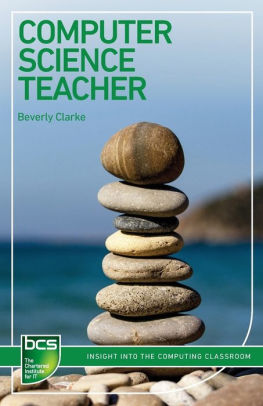
Beverly Clarke - Computer Science Teacher


Computer Science Teacher: Insight into the computing classroomIncreased focus on computer science has recently brought about the new national curriculum in computing. It is the role of the Computer Science Teacher to not only understand the curriculum and subject inside out and teach it to their classes but also to influence their pupils perceptions of computing and how it will shape their futures. This book explores the role of Computer Science Teacher in a secondary school environment. An overview of secondary school computing is covered, along with what the role encompasses, the attributes, knowledge and skills required to be a success and useful standards, tools, methods and techniques you can employ. Case studies and quotes from schools and current teachers are also included. 

Beverly Clarke 


Beverley Clarke is a former student of St. Joseph's High School, Guyana 

 https://uk.linkedin.com/in/beverly-clarke-a1613a9a
Beverly started her computing career working in IT support for a county council, this was followed by further roles in IT support for corporate IT companies. Having grown up in different countries, she did not see a computer until she was twelve. She embraces the computing curriculum as a guide for developing all of our futures nationally and globally, and is a keen proponent of computational thinking. She is a former secondary school teacher and Director of Computing. Beverly is now an Author, Education Consultant and Computing At School (CAS) Outreach Support for the South West region. Her book- “Computer Science Teacher – insight into the computing classroom”, was published in August.

As well as being a qualified teacher, Beverly is a Chartered IT Professional (CITP) and is National Professional Qualification in Senior Leadership (NPQSL) qualified. She is the subject matter expert for BBC Bitesize videos on Computational Thinking, and specialises in the Key Stage 3 element of the new Computing curriculum.

Within schools, Beverly has successfully led departments, been seconded to “Sharing of Best Practice teams” and managed whole school projects. She also works with BCS – Chartered Institute for IT, writing subject material and delivering workshops to trainee teachers.

She has spoken at a variety of conferences such as Surrey Subject Leaders, numerous Computing At School (CAS) hub meetings, the Future Sync Conference and at the CAS South West Regional Conference.

https://www.youtube.com/watch?v=qHA2ZI_4xtg
 https://www.crunchbase.com/person/beverly-clarke#section-overview

Of Interest
 https://www.youtube.com/watch?v=seJH5VF8vLQ


Prof Harry Drayton - Obituaries

https://www.kaieteurnewsonline.com/2016/09/21/a-tribute-to-dr-harold-drayton/

Of Interest
See the source imagehttps://prabook.com/web/harold_alexander.drayton/793887
https://stanislauscollege.blogspot.ca/2016/01/harry-kathleen-and-richard-drayton.html
 https://www.stabroeknews.com/2017/features/in-the-diaspora/09/04/an-act-of-faith-part-one/
 https://www.stabroeknews.com/2017/features/in-the-diaspora/09/11/an-act-of-faith/
Imagining a new university
At the age of 32, my father Harold Drayton was asked by Cheddi Jagan to return from Ghana, where he was a lecturer in Kumasi, to British Guiana to lead the making of a national university. He was then barely two years out his PhD (on cancer viruses). The same letter of January 1962 appointed him Cheddi's personal representative in Ghana, and instructed him to seek advice from W. E. B. DuBois . He met with DuBois in Accra in June 1962. Later in December he visited J. D. Bernal at Birkbeck in London to seek counsel. Back in Georgetown he wrote the White Paper on Higher Education which in February 1963 went to Parliament. He recommended the appointment of the distinguished left scientist Lancelot Hogben as Vice Chancellor. The new university opened, in record time, in late 1963, with my father as Deputy Vice-Chancellor. It received a special dividend from the United States in the form of academics who had been driven out of their posts by McCarthyism in the 1950s, mostly for their membership of the CPUSA -- including the economist Horace Davis, the father-in-law of the historian Natalie Zemon Davis.
Unlike at the University of the West Indies, from which he had been expelled for his political activities in 1951, it would not be a tropical Oxbridge or London: there would be no gowns, no high table, no expensive residential college, no rationing of access to education via price. It would be as near free as possible for students, who would be able to continue working while they studied. Drayton wanted a university which would transform the society by breaking the link between social class privilege and access to education. He wanted a university which would be an instrument for both making an independent Guyana which would break with colonial underdevelopment, and for equipping Guyanese to participate in the life of the mind and cosmopolitan society at the highest level.
Towards these ends of citizenship, access to the highest kinds of learning and culture, and economic and social decolonization, came his most creative initiatives. He wanted to solve two connected problems. On the one hand, very few people had access in the society to 6th Form education, the traditional preparation for university. On the other, that privileged minority who had had access to advanced schooling in the colony had been submitted to a kind of self-alienation: they were taught very little about Guyana and the Caribbean, and were schooled in a sense of their intellects as derivative offshoots of a British excellence in which they could only be subaltern participants. His solution was to plan a very strong foundation year with three compulsory courses. First was a course on World Civilization, for which Horace Davis and Morrison Sharp were to be responsible. Second, "Caribbean Studies", explicitly pan-Caribbean, rather than simply anglophone in its scope, for the inaugural version of which Henri Bangou of Guadeloupe, Jean Briere of Haiti, Elsa Goveia of Jamaica, Maurice Halperin of Havana would offer lectures which would be offered to the public and not just registered students. Third was "Social Biology" the course he would lead, offering 90 lectures over the academic year. The name "Social Biology" was suggested by Hogben: it was an act of piracy, capturing the euphemism under which eugenics had been marketed in the early 20th century for a very different idea of bringing science to the people towards the work of social transformation.
"Social Biology" was, first, my father's attempt over forty hours to introduce every student to the best scientific explanations of the origins of the universe, life, man's place in nature, human difference and the mythologies of race, the biological basis of mans unique capacities such as the human foot, the hand with the opposable thumb, the nervous system and brain, binocular steroscopic vision and the capacitiy for speech and language. But he then went on to 30 hours on human cultural evolution, man the tool maker, energy and technology, hand axe cultures, the multiple discoveries of animal husbandry and agriculture, urbanisation and the culture of cities, a comparison of human cultural development in Africa, Asia, Europe and the Americas, nutrition, demography, the social determinants of health, social inequality and its impact on human biology and culture, pollution of the biosphere and the risks of pesticides and ionising radiation. Throughout it was built on the vision that the natural and social sciences, the humanities and arts would be presented as a whole, with science being taught through and along side music, literature, and the visual. The course, for example, began with him playing 'Jupiter' from Holst's *The Planets* as he introduced the theories of the origins of the universe, describing the many mythological and religious explanations before culminating in an explanation of the Big Bang and the solid state theories.
Only a small portion of his vision was fully realized. By the time he returned to Guyana, the British-American-Canadian covert operation to remove Jagan from power was in motion, which would yield its result in his fall from power in 1964. Beyond this, Hogben, who at this stage of his life was living in an alcoholic stupour, proved deeply disloyal, and my father found himself on the hard side of nasty university politics. My father retreated from his administrative role to be Professor of Biology. There was under Burnham an attempt to fire him which was blocked in a meeting of the Board of Governors of the university by Sir Arthur Lewis, the St Lucian economist, and future Nobel Laureate in Economics, who was then Chancellor of the University.
The Social Biology course however he kept full control over, and it ran until he left the university in 1971 -- no one who was still there felt able to teach it. For the rest of his life former students came to tell him how the course had changed their lives. A decade later, when we were in Barbados and he was no longer in a university, my sister and I would receive versions of these lectures in the car on the way to school. In important ways they made me who I am.
But he also lived to see realised his core hope that the university would be an instrument through which poor people might change their lives through access to a local university. I offer just one example. A man called Raghu Persaud, with little education, working first as a gardener at the Agricultural station through demonstrating his extraordinary gifts with plant classification and breeding moved into their technical department, then via the university moved into a scientific role, was sent to Reading for a Master's in Plant Taxonomy (which he passed with distinction, but could not be awarded the degree because he did not have a first degree), ending up with the New York Botanical Garden, but dying tragically young. My father wrote: "What a truly remarkable human being. Had he been born and grown up in better circumstances, and in a more supportive environment, who knows what heights he might have scaled?". In some ways, that was the question which underpinned his whole vision of a university: how to make a society which would allow the fullest development of every human potential irrespective of the circumstances of birth and the accidents of life?

Feb 18, 2018

Saints Annual Dinner/Dance 2018

Alumnus Dr. David Singh addresses U.G. Conference


Education for a Green Economy
David Singh, Vice President, Conservation International
January 31, 2018
Image result for photo of david singh conservation international
I would like to thank the University of Guyana for the opportunity to speak, and to acknowledge the presentations of the previous speakers who have thoughtfully addressed education reform in the context of Guyana’s socio-economic development; and to add that a truly sustainable future for Guyana requires equal attention to the three dimensions of economic, social and environmental wellbeing.
In speaking of education and our future, I would like to emphasise that in a most fundamental way we are focused on human capital, which is proven to be the basis for any sustainable economy. It also presupposes that we have a common view on what are the current challenges and opportunities, and perhaps more importantly, that we have a common understanding of the future we want.
I would like to associate my remarks closely with those of Mr Chris Fernandes. He has distilled out some clear steps to address the big challenges in our education system.
As we think of the future we want, there are two distinct possibilities.
Our current economy has always been commodity driven, always exposed to external forces. Our brain drain has been unchecked and the rate of out-migration of our most qualified has outstripped every other country on the planet.[1] But on the flipside, our natural capital – our ecosystems, especially when measured against the size of the population, is among the highest, most intact, and most valuable in the world. And yes, there is the promise of oil revenues from 2020, just two years from now.
Our choice of future will be determined today. Do we continue blithely along and accept a future in which we depend on commodities such as oil, over which we have little control – an economy characterized by the so-called resource curse? Or do we create a future by building a solid human capital foundation, addressing our infrastructural needs and social inequities, while maintaining our truly world class ecosystems?
Exactly two weeks ago and in this very room, one of the world’s leading green economy specialists Pavan Sukhdev described an economy that “results in improved human well-being and social equity, whilst significantly reducing environmental risks and ecological scarcities.” That my friends, describes a green economy and one that we all would want. It is a necessary choice to secure a future for humanity.
This green economy path is the right turn at the crossroad where we now find ourselves. From my perspective working for an organization that helps people care for nature, a green economy future for Guyana is only possible through an obsessive focus to turn our human capital from the deficit where it has been for decades, into a net positive. From the skills we need, through to a fundamental shift in human behaviour, all will be required to achieve a green economy.
But this requires education reform. Not education reform in small fontsize, but big and bold and with obsession. We are in a state of emergency.
In 2015, the Registrar of CXC Dr Didacus Jules called for a paradigm shift in education, where, “Content will give way to competence; analytical skills will supersede memorization; and interdisciplinarity will reinforce key competencies.” He stated that our education systems in the Caribbean are no longer working, and we simply cannot continue to tinker with the system.
That was 2015, and we have continued to tinker. Our current education system, has failed to help Guyana to deliver the human capital that we require – one may argue that it trains people for the market abroad; it alienates us from our land and resources, our natural patrimony. A big part of the issue relates I believe to the metrics we use to measure performance. We say that we cannot manage what we do not measure, but often we only manage what we measure. And so, we manage through simple indicators such as percentage passes; number of schools built; number of teachers graduated; number of CXC subjects our children write. The inventory list in the supply chain of human capital improvement delivery is long.
But what if we measure against impact? I would like to propose three benchmarks that ought to form the foundational goals of a reformed education programme.
Firstly, we must see a reduction and ultimately a reversal in the net out-migration of tertiary trained graduates and school leavers. We cannot begin to think of building a critical mass to move our development forward without training Guyanese for Guyana.
Secondly, and related to this, we must increase the relevance of education for our regions and communities. We are increasingly South American even as we honour our Caribbean history. We cannot hope to build pride in our people all around Guyana if the education and training they receive alienates them from their family’s culture and community’s way of life.
And thirdly, we must reduce the amount of retraining that employers must undertake before new employees can become productive. This affects the balance sheets of our private sector and speaks to the relevance and effectiveness of our educational system to the needs of our society. [2]
Colleagues, Guyana can be a world class destination of excellence in a green economy. But we cannot and will not achieve this without an obsessive focus on education reform today, now, and long before 2020.
A dream? Perhaps, unless we have the guts and the spirit to take a non-partisan state of emergency approach to the issue; where we pitch our minds to foundational goals and real impact. For most Guyanese, your lifetimes are ahead of you; for some, your lifetimes have already been etched in the sands of time; and for some, this is our lifetime.
We have a chance that will not come again for the foreseeable future by which we can do something. Something that can take us out of the barren barrel called “potential” and into a reality and a future that we all want and deserve.
Guyana’s world class natural capital found in its intact ecosystems and oil wealth is the basis for a world-class green economy, provided that there is the human and social capital to make this happen. This ambition is achievable: Guyana’s economy is small and can be readily influenced; its population is small and highly trainable; and the opportunity costs for this economic transformation are low given the nascence of our private sector and the intactness of its ecosystems.
Let us act now.


[1] A 2016 World Bank study titled Global Talent Flows, highlights that for Guyana, the emigration rate of high‐skilled workers to OECD destinations was 93% in 2010 – the highest of the over 200 countries studied. But this trend in out-migration in the Caribbean is not unique to Guyana. Jamaica, Trinidad and Barbados are also among the highest in the world.
[2] Most recent studies show that 44% of all new employees have to be retrained by their employers before they can become productive staff. From, Skills for Green Jobs Study – Guyana, International Labour Organisation, Office of the Caribbean, 2017

Of Interest
http://www.uog.edu.gy/newsletters/union-input-vital-education-sector-reform
https://www.youtube.com/results?search_query=turkeyen+and+tain+talks+11+Education+as+Freedom

Turkeyen and Tain Talks 11 - Education Reform Materials
FACEBOOK: https://www.facebook.com/pg/UGPACEAlumni/photos/?tab=album&album_id=1881525638527050